Hair or headwear
Hair, bangs, or headwear partly covers one or both eyes.
DS-160 photo error guide
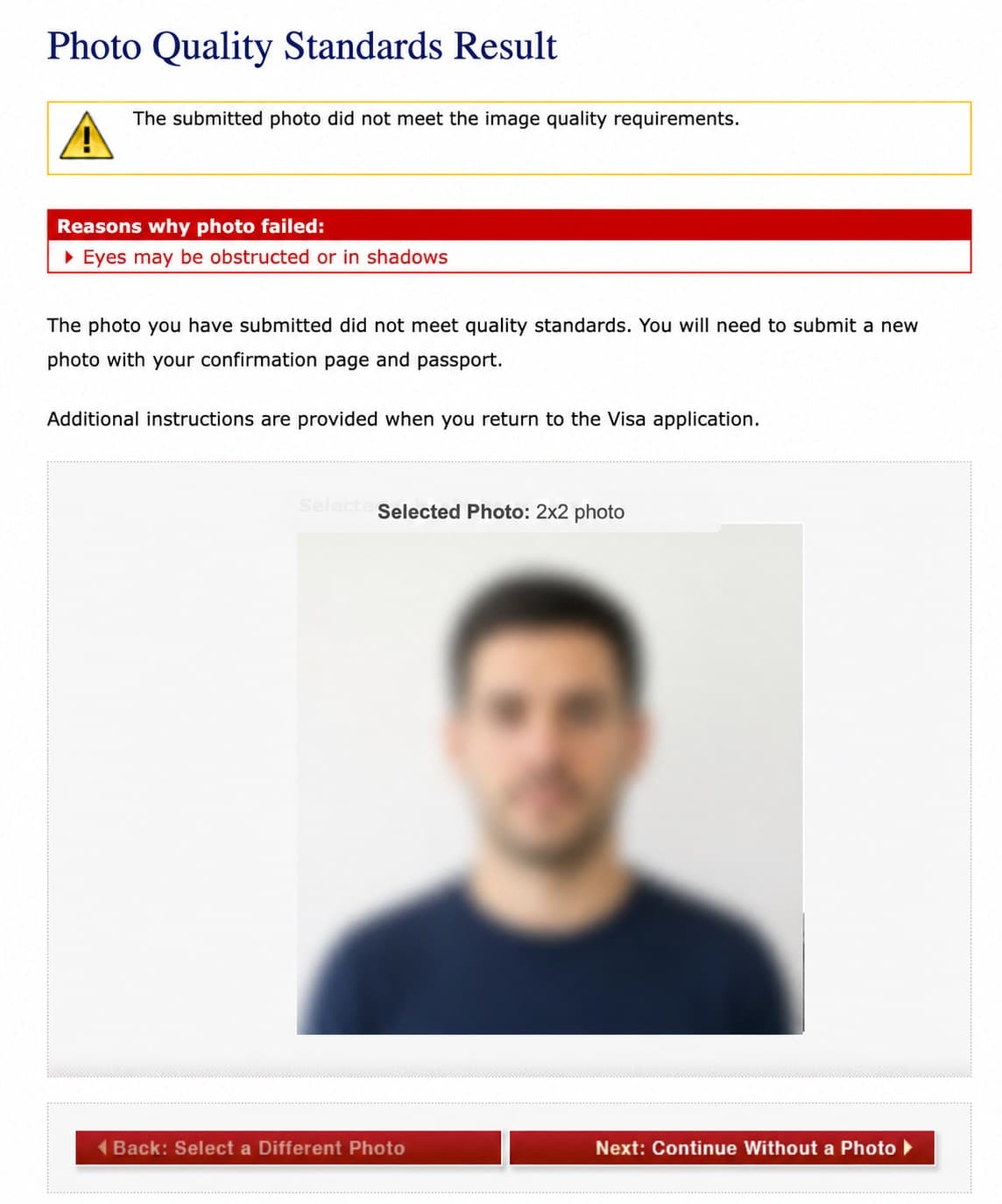
This DS-160 error usually means the checker could not clearly see both eyes. Common causes are hair, glasses glare, or dark eyelid shadow.This DS-160 photo error usually means the checker could not clearly see both eyes. The most common reasons are hair over the eyes, glare from glasses, or dark shadow around the eyelids.
Quick answer
Before you resubmit, make sure both eyes are fully visible and evenly lit. If one eye is still blocked, dark, or crossed by glare, retake the photo.
What it means
“Eyes may be obstructed or in shadows” means the checker cannot read the eye area clearly enough. It is not only looking for open eyes; it also needs enough visible detail around them to evaluate the photo consistently. A face can look acceptable to you and still fail if one eye is darker, partly covered, or interrupted by glare.
Most cases come from a small number of eye-area problems rather than the whole image.
Hair, bangs, or headwear partly covers one or both eyes.
Heavy brow or eyelid shadow makes the eye area look too dark.
Glasses create glare, dark reflections, or frames across the eyes.
Uneven lighting leaves one eye less visible than the other.
Move hair away from the face and make sure no frame, reflection, or object overlaps either eye.
Face a soft light source so both eyes are lit similarly. Avoid overhead light that creates deep brow shadow.
If lenses create glare or frames cut across the eyes, retaking the photo without glasses is usually safer.
If one eye remains hard to see even after better lighting and positioning, use a new photo rather than resubmitting the same file.
Need help with the failed file?
Upload your photo if you want help correcting visibility, lighting, crop, and the final file format.
It means the DS-160 photo checker could not read the eye area clearly enough. The usual causes are hair, glare, frames, or shadow over one or both eyes.
Sometimes. If both eyes are present and the issue is mild shadow or glare, a corrected version may work. If the eyes are physically blocked or still hard to see, retaking is safer.
They can. Reflections, tinted lenses, or frames crossing the eyes can all make the eye area harder for the checker to evaluate.
Not exactly. Poor illumination is a broader lighting problem across the photo. This error is more specific to whether the eyes are visible and evenly lit.
Use this guide when the whole photo is being flagged for uneven lighting.
Review the most common visibility, crop, and background problems.
Check the broader rules for expression, background, size, and eye position.